
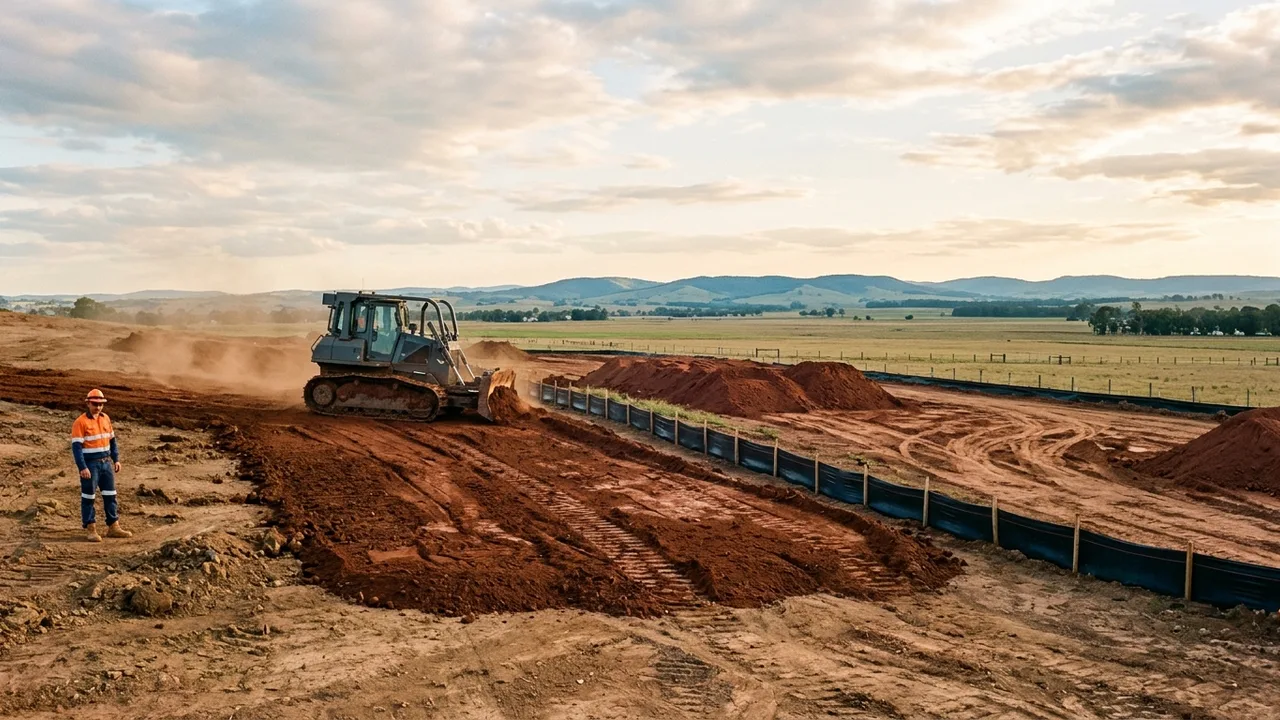
Bulk Earthworks Toowoomba for Large Sites
Your plans call for a lot of soil to move, and you want the price to hold. Bulk earthworks in Toowoomba start with a clear scope and the levels on your drawings.
Bulk earthworks in Toowoomba means moving the large volume of soil and rock a site needs so it reaches the levels on the engineer's plans. It suits subdivision stages, commercial lots, big house pads and any block that sits well above or below where the build needs it. Costs stay under control when the volumes are measured before the machines arrive.
What is included
- Cut to design levels High ground is removed until the surface matches the approved plans, so the builder starts from the right height.
- Fill placed in layers Low ground is built up in controlled layers so it compacts evenly and holds its shape.
- Cartage of surplus or imported material Soil that is not needed leaves site, and fill that is short comes in, so the haul is a real part of the price.
- Topsoil stripping and stockpiling Good topsoil is set aside for landscaping later instead of being buried under fill.
- Final shaping for drainage Falls are trimmed so water runs off the site and does not pool against slabs or batters.
How it works
-
Measure the volumes
The plans are measured to work out how much material is cut, how much is filled and how much must be carted away or brought in.
-
Agree the scope and price
You get a clear scope for the site before any machines turn up, so you know what the quote covers.
-
Strip and cut
Topsoil comes off first, then the high ground is cut toward design levels with scrapers and excavators.
-
Place and compact fill
Fill goes down in layers and each layer is compacted before the next one is added.
-
Trim to final levels
The surface is shaped to the plan levels and drainage falls, ready for the next trade.
Bulk earthworks in Toowoomba: what the work involves
Bulk earthworks is the heavy first stage of a build. Crews strip the topsoil, cut the high ground, place fill in the low ground and shape the surface to the levels on your engineer's drawings.
The job usually includes cartage. That means trucking surplus soil off site, or bringing fill in when the site is short. It often includes rough drainage falls too, so water leaves the site instead of sitting against a slab.
This work suits a single large pad as well as a subdivision stage. The size of the job changes the machines, not the basic steps.
Cut and fill: why the balance sets your cost
The biggest cost driver is whether the cut and fill balance. If the soil cut from the high side is enough to build up the low side, little has to leave or arrive, and the price stays lower.
When the site is short of fill, material must be bought and hauled in. When it has too much, the surplus must be carted off and placed somewhere. Every load adds truck time, so the haul distance matters as much as the volume.
A good contractor tells you where your site sits on that balance before work starts, because that is where cost overruns usually begin.
Detailed earthworks plans and the takeoff
A takeoff is the measurement of cut and fill volumes from your plans. Accurate pricing starts there, because guessing volumes is how a quote ends up far from the final bill.
The takeoff gives the contractor a number for cut, a number for fill and the difference between them. From that they can plan truck numbers, machine days and the order of work.
If your plans change after pricing, the volumes change too. Working from the current approved drawings keeps everyone on the same figures.
Excavation, rock and old services
Excavation on a large site can meet rock, old footings or buried pipes. Whether it does depends on the ground, and a contractor can often read the likely risk from the geotechnical report and a walk over the site.
A scope that names how rock and buried services will be handled gives you a clearer price than one that stays silent. The machines matter here too. Rock can need a larger excavator or a different approach to cutting than soft soil.
Tell the contractor what stands on the site now and anything you know about past use of the land.
Toowoomba clay, wet weather and compaction testing
Clay soils around Toowoomba can turn soft and sticky after rain. Wet clay is hard to cut, hard to haul and hard to compact, so a rainy week can stall a bulk earthworks job.
Experienced crews plan around this. They keep fill at the right moisture, shape the surface so rain runs off instead of soaking in and avoid working material that is too wet.
Clay also moves as it dries and wets, which is why compaction and drainage matter so much under a pad. A pad built on poorly placed fill can settle, and the slab above it follows. Where your plans or council conditions call for certification, the fill is tested to show it was compacted properly.
Scrapers, tipper trucks and the plant on a large job
Scrapers cut, carry and spread soil over short distances, which makes them efficient on wide open sites. Excavators load tipper trucks when the soil has to travel farther or leave site.
Rollers compact each layer of fill, and graders trim the surface to final levels. The mix of plant depends on the volume, the haul distance and how much room the machines have to work.
More machines do not always mean a faster job. The right plant working in the right order is what keeps the site moving.
What to look for in a bulk earthworks contractor
You want one crew that can handle the cut and fill, the cartage and the finishing, so the job does not stall between trades. Ask whether the same contractor can carry on into drainage, trenching and roads if your stage needs them.
Licensed contractors should do the regulated parts of the work. A contractor who knows Toowoomba ground will talk about clay, drainage and wet weather without being prompted.
Tell them your suburb, the area of the site and how the ground falls. That is enough to start a sensible conversation about scope.
Bulk earthworks options
- Cut and fill High ground is cut and low ground is built up in layers, so the whole site lands at the levels on your plans.
- Soil removal and cartage Surplus material is trucked off site, or fill is brought in, when the cut and fill do not balance.
- Subdivision and estate stages Large lots and stage works are shaped in bulk before roads and servicing follow.
- Compacted building pads Pads are filled and compacted so the builder can start on a firm, level surface.
Bulk earthworks across Toowoomba
Frequently Asked Questions
How long does a bulk earthworks project take in Toowoomba?
What is a civil takeoff for bulk earthworks?
What mistakes should I avoid with large-scale earthworks?
Get it priced
Site levels holding up your build? Send through your plans and get the earthworks moving.
Share the details and we will help you take the next step with confidence.