
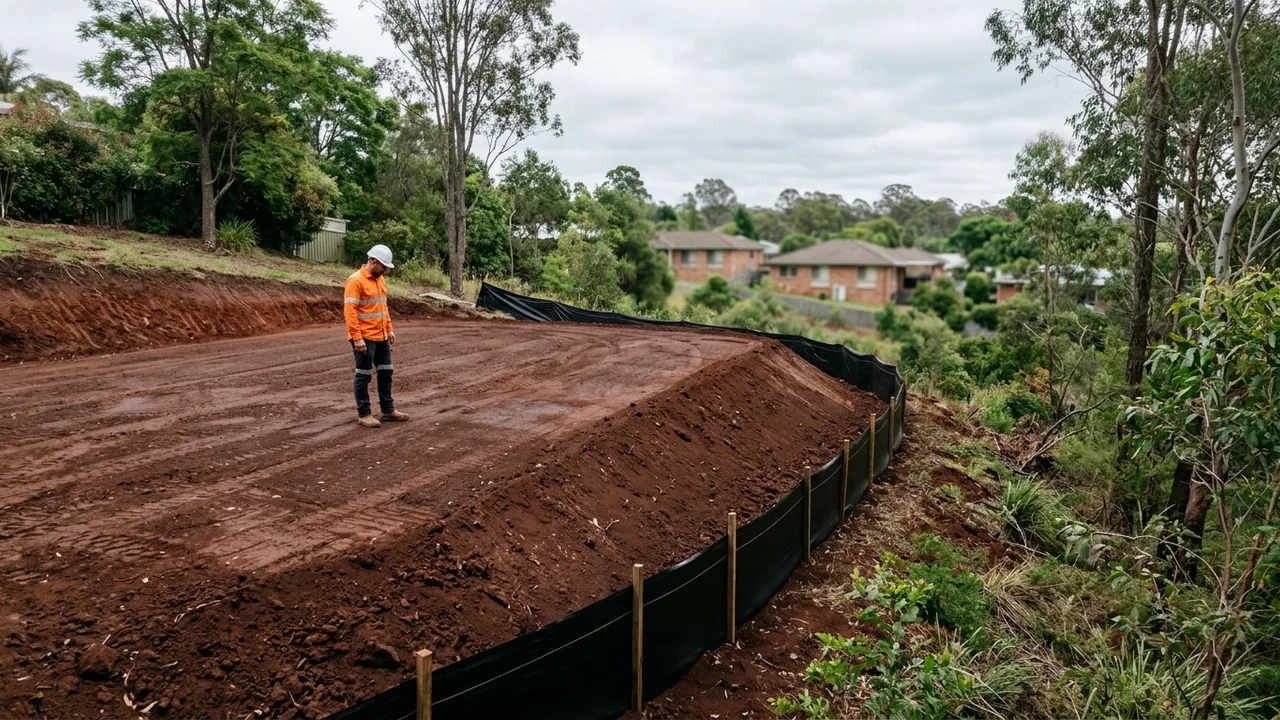
Civil Earthworks in Rangeville
Steep block, approved plans and a build that cannot start until the ground is right? Civil earthworks in Rangeville bring the site to design levels with a compacted pad ready for the builder.
Civil earthworks in Rangeville usually come down to two kinds of job. One is shaping a steep escarpment block so a house, shed or driveway can sit on it. The other is levelling a flatter lot in the older streets for a pad, a drain or a new access. A contractor who works to your engineer's plans can take on either, and the large properties near the Great Dividing Range suit a crew that handles cut, fill and stormwater together.
Services in Rangeville
- Road construction and formation Estate roads, rural access roads, heavy duty pavements and kerb and channel built to engineered levels.
- Detailed excavation Precise digging for footings, foundations, trenches and services, cut to the levels and grades you need.
- Commercial site preparation and pads Clearing, cut and fill and compacted building pads for commercial sites, ready for the builder to start.
- Stormwater and drainage Pipes, pits, outfalls and channels that move stormwater off your site and away from slabs and batters.
- Bulk earthworks Cut and fill, soil removal and cartage to bring a large site to the design levels on your plans.
- Subdivision earthworks Lot formation, bulk earthworks, roads and drainage for new estates, built to the engineer's plans.
Civil earthworks in Rangeville: cut, fill and pads on sloping land
Cut and fill is the core of the work. Cut means digging soil away where the land stands higher than the design level. Fill means bringing in material and building it up in layers where the land sits lower. On a sloping Rangeville block, both usually happen on the same site, and the aim is a flat, compacted pad where the slab goes.
Compaction matters as much as the shape. Fill that is rolled in layers holds its level under a slab. Loose fill settles, and a settling pad shows up later as cracked walls and doors that stick. Where your conditions call for it, fill is placed so it can be tested and certified.
The levels come from your engineer's drawings. A qualified earthworks crew sets out the site from those plans, cuts and fills to them, and checks the finished surface before the builder arrives.
What excavation and detailed earthworks involve on a steep block
Excavation on a hillside is more than digging a hole. It covers cutting a bench into the slope, trenching for water, sewer or power, and forming the footings area. Detailed earthworks is the finer stage that follows the bulk work: trimming the pad to tolerance, shaping batters (the sloped faces left after cutting) and finishing the surface so water leaves the site.
Batters on a range block need thought. A face that is too steep, or left bare, can wash out in heavy rain. The right slope and cover depend on the soil and the height of the cut, and the engineer's plans and the contractor confirm those on site.
Good access shapes the job too. A narrow drive or a steep entry changes which machines can reach the back of the block, and that changes the program and the price. Your scope should reflect it before anything starts.
Can one crew handle drainage, trenching and access as well?
Yes, one contractor can usually cover bulk earthworks, excavation, stormwater and a formed driveway or road on the same job. That keeps one crew accountable for the levels, so the drains meet the pad and the pad meets the road.
Stormwater is the part that decides whether the finished site stays dry. Water running down from higher ground has to be caught and carried away, not left sitting against a slab. Swales, pipes and pits are set to fall in the right direction before the final trim.
For larger jobs, such as a subdivision stage or a townhouse development, council conditions may also call for roads, kerb and channel or drainage before sign off. Having those works under one scope means fewer gaps between trades and a clearer price from the start.
How clay and rain affect earthworks near the range
Toowoomba clay holds water and moves with it. It swells when wet and shrinks as it dries, and a wet week can turn a cut face soft and a work area slick. A contractor who knows the ground plans around the weather, protects open cuts and avoids placing fill on wet, soft ground.
Rock and old services can turn up when you dig into a hillside. A qualified contractor accounts for that when setting the scope and rates, and the tradesperson confirms what the ground is like once they see the site.
Rangeville ground from East Creek to the range crest
Rangeville sits on the eastern side of Toowoomba. Its western end has settled streets and the low ground around East Creek, and its eastern end climbs to the bushy crest of the Great Dividing Range. The ground and the job change as you move across it.
In the lower, older streets, the work tends to be pads for townhouses and units, driveway reshaping and drainage that carries water toward the creek. Near the East Creek Triangle, thinking about where water goes comes before thinking about where the slab sits.
The housing varies a lot. You will find post-war streets and sizeable mid-century homes, along with newer brick houses for families, plus townhouses and units. Large escarpment properties and some very big rural-residential parcels round it out. A small renovation pad and a multi-hectare block need very different machines and a different scope.
The eastern boundary runs along the top of the range. Blocks near that edge, around reserves such as Picnic Point Park and One Tree Hill, tend to fall more steeply, so expect more cut, more retaining and closer attention to where stormwater leaves the property.
Frequently Asked Questions
Who needs a QBCC licence for earthworks in Rangeville?
Get it priced
Site levels holding up your build? Send through your plans and get the earthworks moving.
Share the details and we will help you take the next step with confidence.