
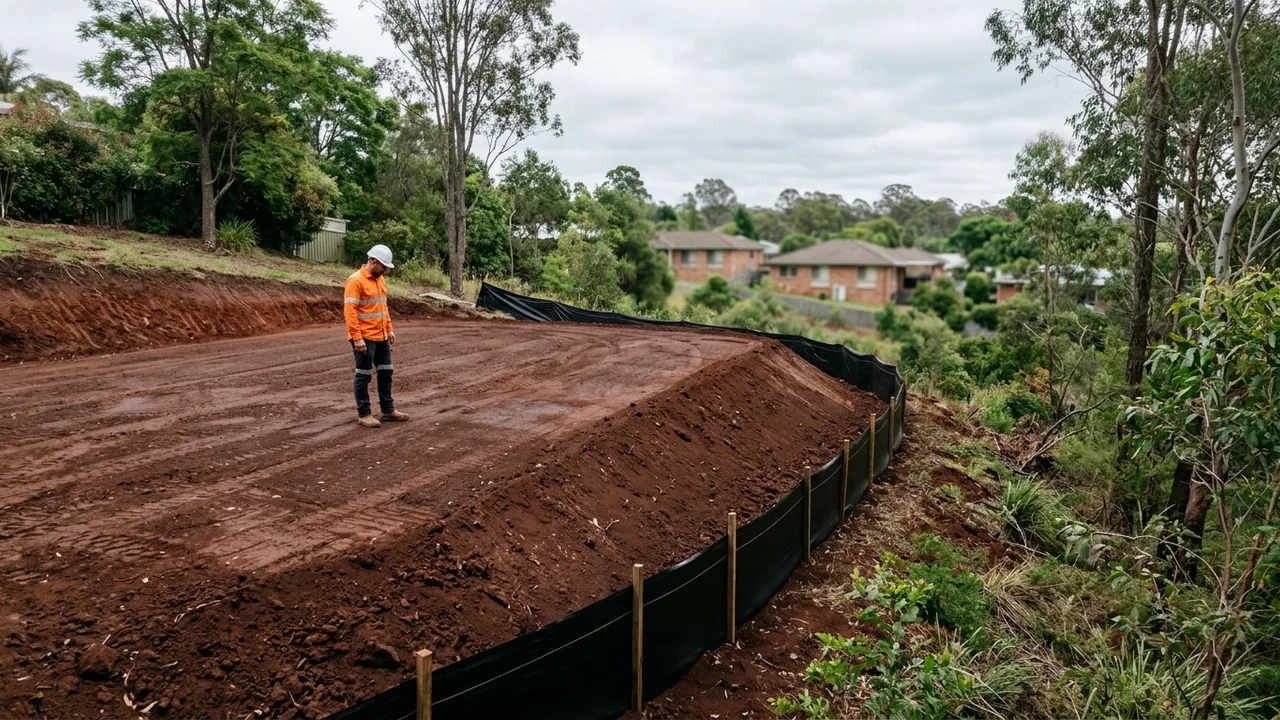
Civil Earthworks in Harristown, Toowoomba
An older lot needs the ground shaped before anything can be built on it. Civil earthworks in Harristown cut, fill and compact the site to your engineer's levels.
An earthworks contractor prepares an older Harristown lot by clearing it, cutting and filling to the levels on your engineer's plans, compacting a pad for the slab and dealing with drainage and service trenches. One crew can usually carry that whole scope. The goal is a site your builder can start on without waiting for the ground to be sorted.
Services in Harristown
- Stormwater and drainage Pipes, pits, outfalls and channels that move stormwater off your site and away from slabs and batters.
- Bulk earthworks Cut and fill, soil removal and cartage to bring a large site to the design levels on your plans.
- Subdivision earthworks Lot formation, bulk earthworks, roads and drainage for new estates, built to the engineer's plans.
- Road construction and formation Estate roads, rural access roads, heavy duty pavements and kerb and channel built to engineered levels.
- Detailed excavation Precise digging for footings, foundations, trenches and services, cut to the levels and grades you need.
- Commercial site preparation and pads Clearing, cut and fill and compacted building pads for commercial sites, ready for the builder to start.
Civil earthworks in Harristown: cut, fill and pads for older lots
Most Harristown jobs start with a lot that already has a history. There may be an old house, a shed, a slab or a sloping yard that no longer suits what you want to build.
The work follows the approved plans. The contractor strips the surface, cuts high ground down to design level and fills low ground in layers. Each layer is compacted, which means rolled and pressed until it is dense enough to carry a slab without settling.
The result is a level pad, the flat, firm platform a builder pours onto. Where your conditions call for it, the fill is placed so it can be tested and certified. The builder and building certifier use those records to check that the pad meets the specified requirements.
The contractor agrees the scope and price with you before machines turn up, so you know what the quote covers.
Excavation on a lot that is already built on
Clearing a lot with an existing house is a different job from shaping bare ground. Old slabs, footings, driveways and garden beds all come out before levels can be set.
Underground services need attention too. Old water, sewer and stormwater lines sit in the ground, and the contractor locates them before digging and caps, moves or reuses them as the plans direct. New trenches for water, sewer or power are then cut to the depth and fall the plans show.
A lot that is being redeveloped often needs this excavation done in tight spaces beside neighbours. Machine size, spoil removal and access all get decided on site, so the job runs without damaging fences or driveways next door.
Stormwater, falling ground and clay after rain
Water that pools against a slab or washes out a batter (the sloped face of a cut or fill) is a sign the levels or drainage are wrong. Fixing it means shaping the site so water leaves instead of sitting.
Harristown sits at a decent height on the Darling Downs, so ground falls away in places and runoff has somewhere to travel. That helps drainage, but it also means water can scour bare soil quickly if the site is left open.
Clay holds water and goes soft after rain, then firms up as it dries. A good earthworks crew reads how the ground is behaving on the day, works dry material where it can and shapes surfaces so rain runs off rather than soaking in. Pipes, pits and swales (shallow shaped drains) are laid to the fall on the plans.
Roads, kerb and drainage for larger redevelopments
Some Harristown sites are bigger than one house. Older, larger lots can be split for townhouses or other attached dwellings, and those jobs bring council conditions with them.
Conditions often call for a new road or access, kerb and channel (the concrete edge that carries water along the street) and drainage connections before sign-off. Bulk earthworks, detailed earthworks for the final trimmed levels, and the road base can sit with one contractor rather than being split across several trades.
That matters for idle time. When the same crew moves from cut and fill to trenching to road formation, the site is not waiting on a handover between businesses. Licensed specialists carry out any regulated parts of the work.
Harristown streets, lots and what they mean for the job
Harristown was first subdivided in 1902 and grew quickly after World War II. The original estate was cut into 177 building sites, so many older lots are modest in size and sit close to their neighbours. Tight lots call for smaller machines and careful spoil handling.
The housing mix runs from timber and masonry houses of the pre-war and post-war years through 1970s and 1980s brick homes to 1990s and 2000s project housing and plenty of townhouses. Each era leaves something different in the ground. Older homes may have stumps, old drains and uneven fill, while newer blocks are more likely to have had a pad cut already and need only adjusting.
The suburb sits about 4.4 km southwest of the Toowoomba CBD, so crews and materials reach it quickly. Jobs near Harristown State School, Rowena Park or the heritage-listed Drayton and Toowoomba Cemetery need truck movements timed around school drop-off and pedestrian traffic.
Frequently Asked Questions
What is the difference between civil construction and building construction on a Harristown site?
Get it priced
Site levels holding up your build? Send through your plans and get the earthworks moving.
Share the details and we will help you take the next step with confidence.