
Civil Construction Earthworks in Toowoomba: Who Works on Your Site
Civil construction earthworks in Toowoomba gets a stalled build moving again. Your plans are approved, but the slab cannot go in until the site is cut, filled and compacted. Local earthworks contractors shape the ground to your engineer's levels so the next trade can start.
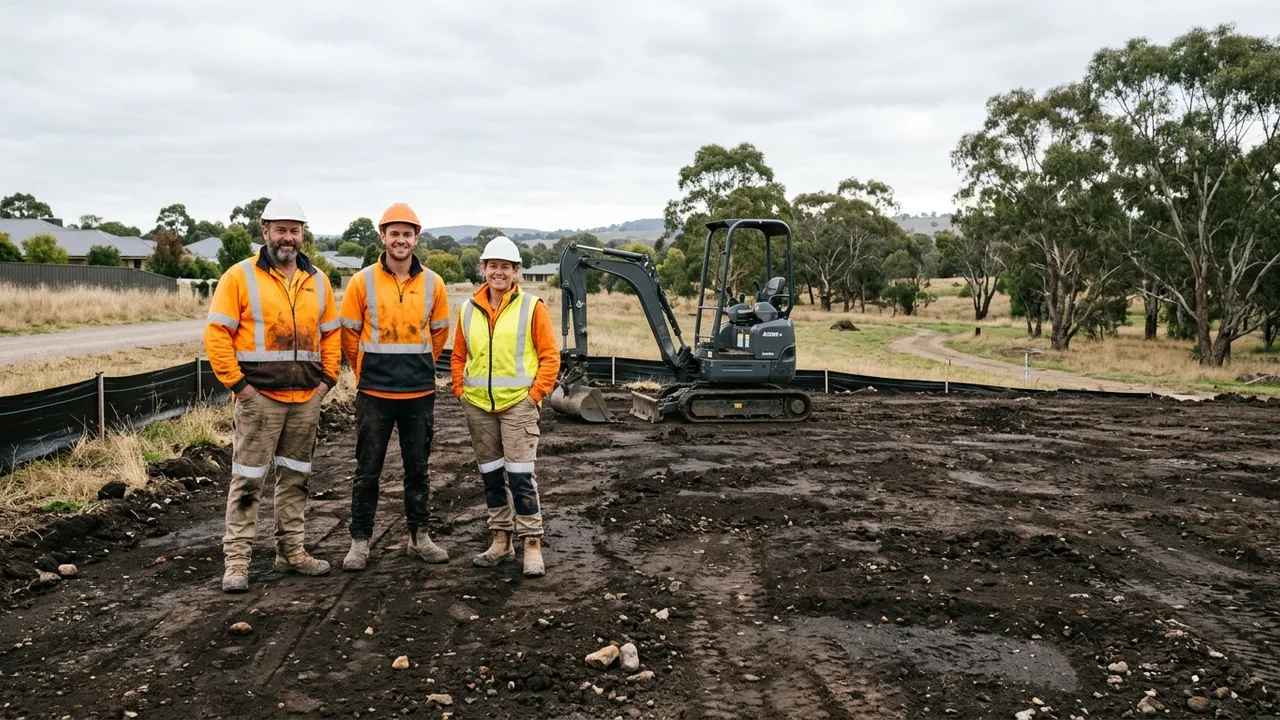
Civil construction earthworks in Toowoomba: when your build is waiting on the ground
Some jobs stall for a clear reason. The engineer's plans are approved and the site must be cut to design levels. A builder wants a compacted pad before the slab goes in. Council conditions call for roads, kerb and channel or drainage before sign off.
Others have a wetter problem. Stormwater pools across the block or washes out a batter, which is the sloped edge of a cut or fill. Some sites need trenches opened so water, sewer or power can reach the building.
Homeowners, builders and developers all land in the same spot. The next trade cannot start until the ground is right, and every idle week costs money.
Who will be working on your site
Ask the contractor who will operate the plant, who will supervise the work and how they will check levels against the approved drawings. Confirm whether subcontractors will handle any part of the scope and who will coordinate their work.
For a commercial pad or subdivision stage, discuss the site access, plant movements and inspection points before agreeing the programme. Ask for examples of comparable projects and confirm the people responsible for survey checks, testing and records.
Match the proposed resources to your drawings and staging requirements. A bulk cut, a service trench and pavement preparation can need different plant and supervision. Your written scope should show who is responsible at each handover.
What the crew actually does
The work usually starts with bulk earthworks, which means moving large volumes of soil to reach the levels on the plans. Excavation follows where footings, services or basins are needed, and fill is placed in layers and compacted so it holds under a slab.
From there the scope can run into roads, kerb and channel, and stormwater drainage. One contractor can often carry cut and fill, drainage and the road together, which means fewer handovers and fewer gaps between trades.
Where your conditions ask for it, fill is placed so it can be tested and certified. That paperwork is what lets the builder and certifier move forward.
How clay soil changes the job
Where a site has reactive clay, the soil swells when it is wet and shrinks as it dries. That movement is why a pad built in a hurry can crack slabs later, and why drainage is never an afterthought.
An experienced operator plans around it. Wet ground is not worked while it is soft, fill is compacted at the right moisture, and falls are set so water runs off the site instead of sitting against a slab.
Your engineer's drawings set the design. The crew's job is to build to them and to read the ground in front of them, which is where local experience earns its keep.
Trimble GPS and cutting to design levels
Cutting to a level by eye is slow and easy to get wrong. Crews that work with Trimble GPS machine control load the design into the machine, and the operator sees on a screen how far the bucket or blade sits from finished level.
The result is a surface that matches the plan more closely, with less over-digging and less rework. It also helps when a site has several levels, such as a pad, a driveway and a drainage swale, because each one can be cut to its own design height.
Good guidance does not replace a skilled operator. It gives a skilled operator a sharper tool.
Scope, price and licensing
Your contractor agrees a written scope and price before machines turn up. The quote covers the work shown on the plans, so you know what the job includes before it starts.
Rock and old pipes are the worries owners raise most often. The contractor looks at the ground and the plans first and talks through how rock or unexpected services would be handled if the site turns them up.
Where the job includes sewer, water or stormwater connections, a licensed plumber or drainer handles that part of the work. National consumer law also protects you as a customer. The work must be done with due care and skill, suit the purpose you told the contractor about, and finish within a reasonable time.
Your next step
If your site levels are holding up your build, request a project review. Give your suburb and tell the contractor what you can put in words: what stands on the site now, how the ground falls, whether plans are approved and what comes after the earthworks.
That gives the earthworks contractor a real picture of the job to scope against.